
Shooting in the Edmonton winter hurts. The air stings your face. You might assume filmmaking focuses entirely on operating the camera and framing the perfect shot. You would be wrong. When you stand outside in minus thirty degrees, 90% of the job becomes logistics. You solve problems. You keep your team safe.
I will share the exact strategies we use at Arctos Media to keep the cameras rolling when the temperature drops. These are battle-tested lessons from the field.
Protecting Your Gear
Sub-zero temperatures physically alter your equipment. Batteries drain fast. Moving a frozen camera into a heated vehicle immediately creates condensation on your glass.
Plan for moisture. Place your gear in a sealed plastic bag or hard case before you bring it inside. Let it acclimatize slowly.
I borrowed a specific tool from astrophotography to solve freezing exterior setups. Wrap a dedicated lens heater around the barrel. It stops frost from forming on the front element.
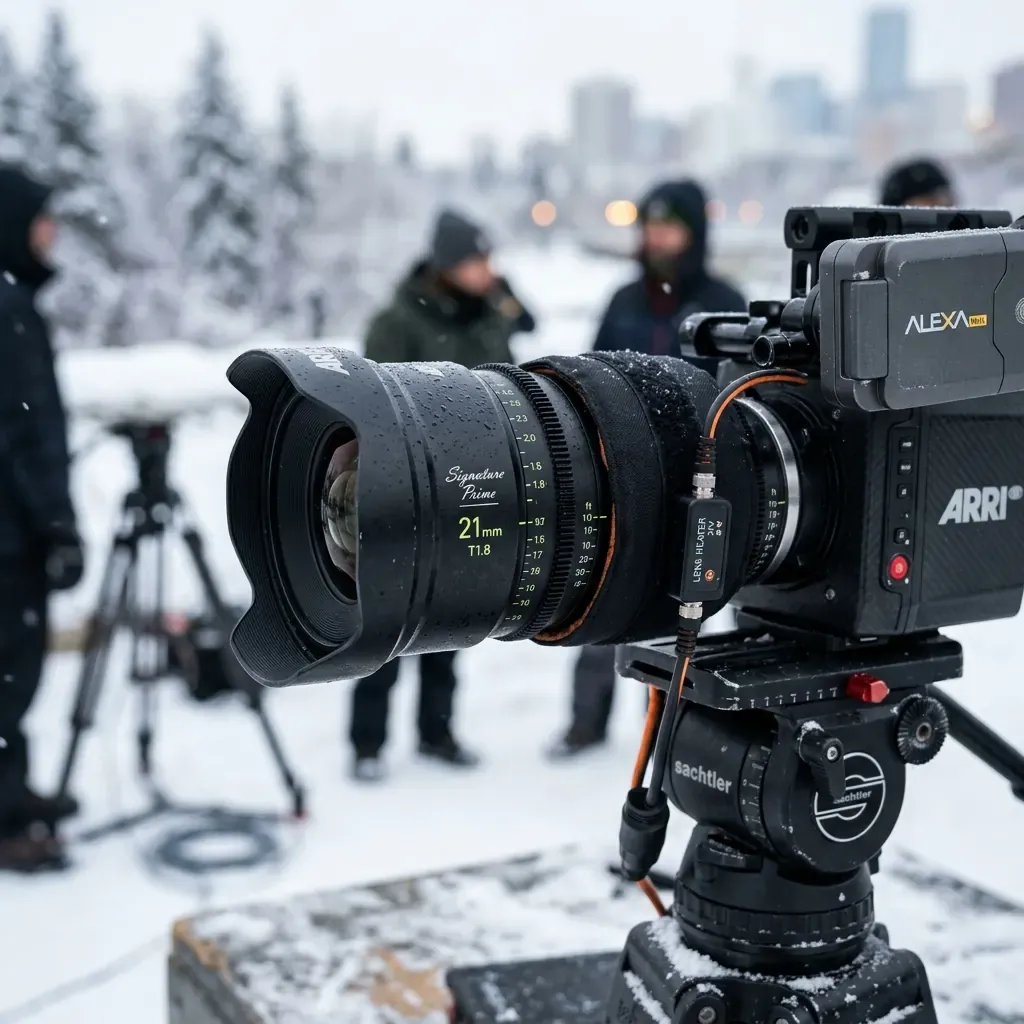 A lens heater is the cheapest insurance on set: it keeps condensation and frost off the front element between takes.
Power Management
Cold kills batteries. Assume every battery you bring will die twice as fast.
We keep a high-capacity solar bank, like an EcoFlow, running in our production vehicle. This creates a charging rotation. A dead battery comes off the camera and goes straight onto the charger in the warm car.
The Winter Production Cart
In winter, you manage human endurance.
Split your production cart into two zones. The first holds your standard lenses, monitors, and media. The second holds your survival station. Stock it with thermos flasks of hot drinks, backup gloves, and chemical hand warmers.
Filmmaking requires collaboration. A shivering grip ruins a production. Carry extra plastic gloves. Tell your talent to bring backup boots. Anticipate the cold.
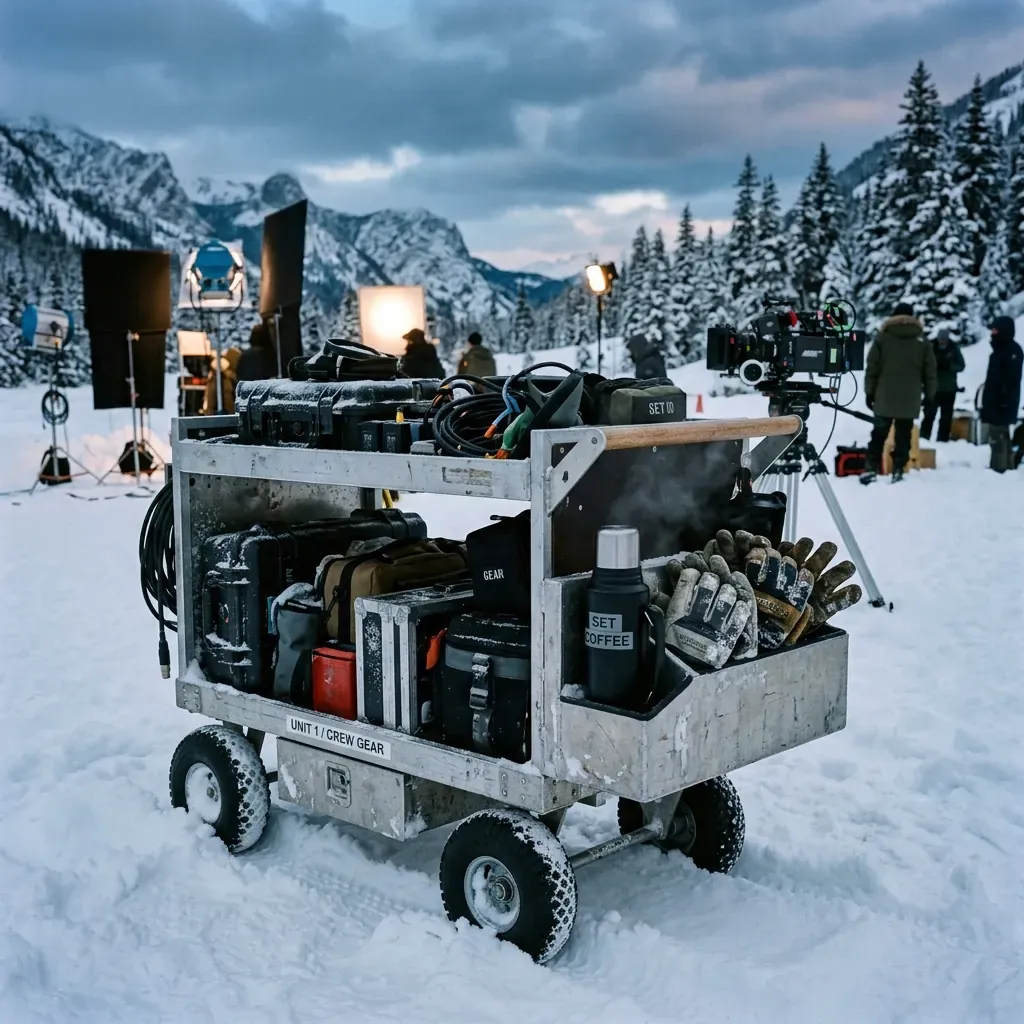 Build the cart for the cold: gear on one side, a warm-up station with thermos flasks and spare batteries on the other.
Lighting and the Elements
Winter creates lighting advantages. Snow acts as a giant bounce board. This phenomenon—the albedo effect—reflects light back up and fills shadows naturally.
Shooting in snow demands strict discipline. Footprints ruin a pristine location. Map out your chronology. Shoot the wide angles before your crew steps into the frame.
Accept the environment. Cold air causes breath to fog. Wind changes direction. Let it happen. The cold introduces variables you cannot control. Trying to fix minor continuity errors will waste hours of daylight. Your audience follows the story, not the vapor.
Need to push tiny buttons on a metal camera body? Wear standard rubber dishwashing gloves underneath your heavy winter mitts. When you pull the big mitts off, the rubber blocks the freezing air. Your fingers stay warm.
Stay warm. Keep the batteries charged. Safety comes first.
— Akeel